Chemical peels are sophisticated dermatological treatments designed to improve the texture, tone, and overall appearance of the skin. By applying a specialized chemical solution, practitioners can remove the outermost layers of dead skin cells, revealing the healthier, smoother skin underneath. If you are looking to revitalize your complexion, understanding the benefits of chemical peels is the first step in your journey toward professional-grade skincare results.
At Kiaeva, we focus on high-performance solutions that deliver visible improvements. Whether you are addressing fine lines, hyperpigmentation, or acne scarring, chemical exfoliation provides a highly effective, controlled method for skin renewal.
How Chemical Peels Improve Skin Texture
The primary mechanism behind any peel is the acceleration of cellular turnover. As we age, our natural skin shedding process slows down, leading to a buildup of dull, dead cells on the surface. Chemical peels, such as those utilizing glycolic or lactic acids, dissolve the bonds holding these cells together. According to the American Academy of Dermatology, these procedures can significantly reduce visible signs of aging and sun damage.
Key Advantages of Professional Peels
Deep Exfoliation: Unlike physical scrubs, peels penetrate deeper into the epidermis for more uniform results.
Collagen Stimulation: Many peels trigger the body’s natural healing response, which boosts collagen production.
Improved Product Absorption: Removing surface debris allows your favorite serums to penetrate deeper into the skin.
Targeted Treatment: Different acids address specific concerns, from brightening uneven skin tone to calming active breakouts.
Comparing Common Peel Ingredients
Choosing the right peel depends on your specific skin type and goals. While some peels provide gentle surface-level refinement, others offer more intensive resurfacing. Always consult with a professional or our shop to ensure you select the appropriate strength for your skin sensitivity.
Ingredient
Primary Benefit
Best For
Glycolic Acid
Surface Brightening
Dullness and Texture
Salicylic Acid
Pore Cleansing
Oily and Acne-Prone Skin
Lactic Acid
Gentle Hydration
Sensitive or Dry Skin
TCA
Deep Resurfacing
Fine Lines and Scars
Scientific Backing and Safety
Safety is paramount when performing chemical exfoliation. The National Center for Biotechnology Information highlights the importance of matching the chemical concentration to the patient's skin phototype to prevent complications like hyperpigmentation. A professional approach involves prepping the skin, monitoring the contact time precisely, and strictly adhering to post-peel care, such as consistent sun protection.
Preparing for Your Treatment
Before undergoing a professional-grade peel, avoid intense sun exposure and discontinue the use of harsh retinoids or exfoliants for at least 48 to 72 hours. This ensures that the skin barrier is intact and less prone to excessive irritation. Following the treatment, prioritize hydration and gentle cleansers to support the recovery process. Proper aftercare is just as essential as the treatment itself to ensure lasting, glowing results.
Conclusion
The benefits of chemical peels extend far beyond mere surface exfoliation. By investing in a high-quality, professional-grade regimen, you can address persistent skin concerns and unlock a more refined, youthful appearance. Remember that consistency and patience are key; your skin requires time to regenerate and respond to these potent active ingredients. Always listen to your skin's cues, and prioritize recovery to maintain the health of your moisture barrier long-term.
How to Use TCA Peel at Home Safely: A Clinical Guide
Learning how to use a TCA peel at home requires a shift in mindset. This is a clinical procedure, not a casual skincare routine. Trichloroacetic acid (TCA) is a potent chemical exfoliant that reaches deeper layers of the skin than standard over-the-counter AHAs. To get professional results safely, you must follow a strict protocol. This involves degreasing the skin, controlled application, and precise neutralization. When done correctly, a TCA peel significantly improves skin texture, clears hyperpigmentation, and softens fine lines.
TCA is a non-toxic chemical used for medium-depth skin resurfacing. Unlike Glycolic or Lactic acids, which work on the surface, TCA causes skin proteins to coagulate. This process sheds old skin layers and triggers new collagen production. Using a professional-grade formula, like those from Kiaeva, is vital for safety. These acids have consistent pH levels and concentrations. This ensures the "strength" on the label matches the activity on your skin. Predictability prevents chemical burns often caused by low-quality, unverified solutions.
Safety First: Essential Precautions
TCA requires respect and preparation. It is not a "beginner" acid. Prioritize your safety by following these rules before you start.
The 24-Hour Patch Test
Never apply TCA to your full face without a patch test. Apply a small amount of solution behind your ear or on your inner forearm. Wait 24 hours to check for excessive swelling, blistering, or allergic reactions.
Identifying Contraindications
Do not use TCA if you are pregnant, have active cold sores, or have used Accutane in the last six months. Stop using Retin-A, Tazorac, or high-strength Retinol at least five days before your treatment.
Selecting the Right Percentage
Beginners should start with a 10% to 15% TCA solution. Reserve higher concentrations (20%+) for when you understand how your skin recovers from lower strengths.
Required Supplies for Home Treatment
Gather your supplies before opening the acid bottle. You cannot stop mid-procedure to find a tool.
Prep Solution: Use a medical-grade degreaser or 70% Isopropyl alcohol.
TCA Acid: Your professional-grade solution.
Neutralizer: A mixture of baking soda and water or a professional neutralizing spray.
Application Tools: Use 2×2 gauze pads. Gauze provides better control and won't drip like cotton balls.
Protective Barrier: Petroleum jelly for the corners of the eyes, nostrils, and lips.
Gloves: Nitrile gloves keep your fingertips from peeling.
Step-by-Step: How to Use TCA Peel at Home Safely
Follow these instructions exactly to ensure an even, safe result.
Cleanse and Degrease: Wash with a soap-free cleanser. Once dry, wipe the skin thoroughly with your prep solution. Any remaining oil will cause "hot spots" where the acid penetrates unevenly.
Protect Sensitive Areas: Apply a thin layer of petroleum jelly to the outer corners of your eyes, your lips, and the creases of your nose.
Application: Saturate your gauze pad so it is damp but not dripping. Apply the TCA using firm, consistent strokes. Start at the forehead, move to the cheeks, and finish with the chin and nose.
Timing: For your first peel, one layer is enough. Leave the acid on for 2–5 minutes, depending on your comfort and the appearance of "frosting."
Identifying the "Frost"
"Frosting" occurs when the acid coagulates keratin proteins, making the skin look white.
Level 1 Frosting: A light, scattered white appearance or redness. This is the ideal goal for most home treatments.
Level 2/3 Frosting: A solid, opaque white sheet. This indicates deep penetration. If this happens, neutralize immediately to prevent scarring.
If you feel unbearable heat or see instant opaque white patches, stop the process.
Post-Peel Care and Neutralization
Once your time is up or you see frosting, you must stop the acid's activity.
Neutralization: Splash your neutralizing solution over your face several times. You may feel a temporary "fizzing" and a brief spike in heat. This is a normal chemical reaction. Continue until the stinging stops.
Rinse: Use cool water and pat dry gently.
Hydrate: Apply a lipid-rich recovery balm or a fragrance-free moisturizer.
Sun Protection: Your skin is now highly photosensitive. Use a broad-spectrum SPF 30+ every morning. UV exposure during healing can cause permanent dark spots.
The Recovery Timeline
The peeling process follows a predictable clinical timeline. Do not panic as your skin changes.
Day
What to Expect
Action Required
1-2
Skin feels tight; looks red or "tanned."
Use gentle cleanser and moisturizer.
3-5
Skin "cracks" and begins to peel.
Do not pick. Keep skin hydrated.
6-10
Peeling finishes; new skin is revealed.
Continue SPF; avoid active ingredients.
14+
Texture improves; collagen builds.
Slowly resume your regular routine.
The "no-pick" rule is vital. Pulling off skin before it is ready causes raw spots, infection, and permanent scarring. Let it shed naturally during washing.
Common Mistakes to Avoid
Even with instructions, beginners often make these errors.
Overlapping Layers: Never apply multiple layers during your first few treatments. This drastically increases the risk of deep tissue damage.
Ignoring the 72-Hour Rule: Avoid heavy sweating, saunas, and steam for three days. Heat can trap inflammation in the skin and cause post-inflammatory hyperpigmentation.
Premature Exfoliation: Do not use scrubs, washcloths, or cleansing brushes to "help" the peeling. Let the process finish on its own.
Using a TCA peel at home is a powerful way to resurface your skin. By using professional-grade products and following these safety protocols, you can achieve a clearer, more youthful complexion safely. Always prioritize the health of your skin barrier over fast results.
Healthy, glowing skin is something many people want, but acne scars, sun damage, dark spots, and fine lines can make it difficult to achieve. While skincare products can help, some skin concerns require a more advanced treatment. One of the most effective options is a TCA chemical peel.
A TCA chemical peel is a professional skin treatment that helps improve your skin by removing damaged outer layers and encouraging new, healthy skin to grow. Whether you’re looking to reduce pigmentation, smooth acne scars, or refresh tired-looking skin, this treatment can deliver noticeable results.
In this blog, we’ll explain how TCA chemical peels work, their benefits, who they are suitable for, and how to care for your skin after treatment.
What Is a TCA Chemical Peel?
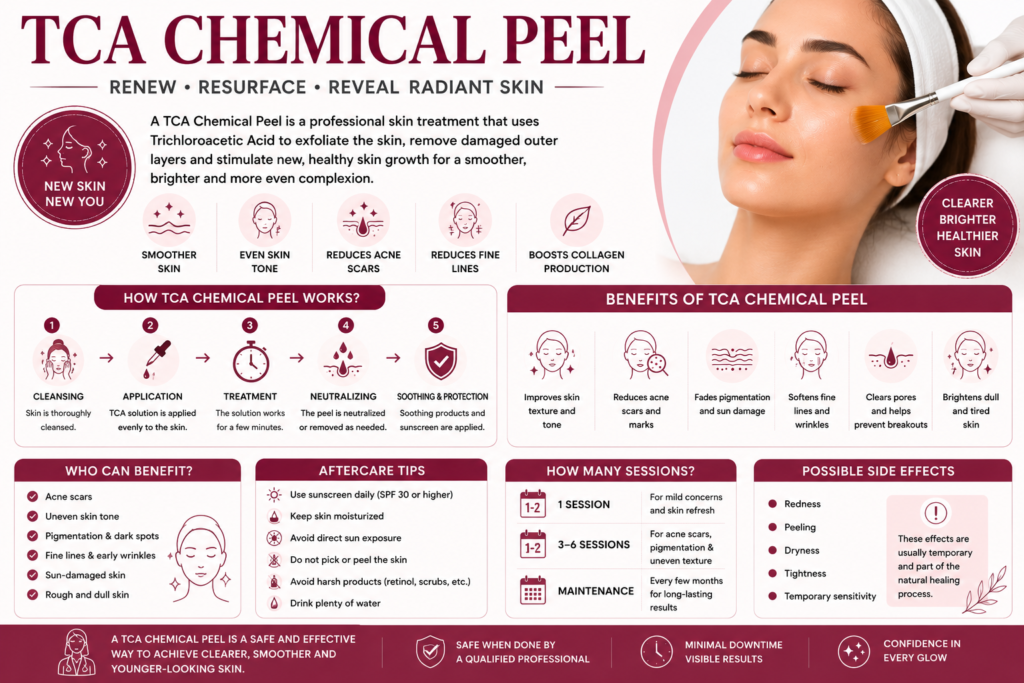
A TCA Chemical Peel is a professional cosmetic skin treatment that uses Trichloroacetic Acid (TCA) to exfoliate and renew the skin. Unlike everyday exfoliating products, this peel penetrates deeper, making it highly effective for treating moderate skin concerns such as acne scars, pigmentation, sun damage, and fine lines.
Why TCA Peels Are Effective
Works at a deeper level than regular exfoliant
Removes damaged outer layers of skin
Stimulates new, healthy cell growth
Adjustable strength based on skin type & goals
Dermatologists and skincare professionals often recommend TCA Chemical Peels because they deliver visible improvements while remaining safe and trusted when performed correctly.
How Does a TCA Chemical Peel Work?
A TCA chemical peel works by applying a carefully measured solution of trichloroacetic acid to the skin, which penetrates deeper than everyday exfoliants to remove damaged cells from the outer layer. As the old skin sheds, fresh new cells rise to the surface, leaving the complexion smoother, brighter, and more even in tone. This controlled exfoliation also stimulates collagen production, which enhances skin firmness and helps reduce the appearance of fine lines and wrinkles over time. The procedure itself is relatively quick, usually lasting about 20 to 30 minutes depending on the treatment area, making it a convenient option for those seeking noticeable improvements without lengthy downtime.
Benefits of a TCA Chemical Peel
A TCA chemical peel offers a wide range of benefits, making it a trusted treatment for people dealing with acne scars, pigmentation, fine lines, or dull skin. By working deeper than everyday exfoliants, this peel helps restore a healthier, more radiant complexion.
One of the main advantages of a TCA Peel is its ability to improve skin texture. The treatment removes rough, damaged layers and leaves the skin feeling smoother and softer. It is also highly effective in reducing acne scars, as multiple sessions can gradually fade scars and create a more even skin tone.
Another key benefit is its ability to fade pigmentation. Sunspots, age spots, and post‑acne marks become lighter as fresh, healthy skin replaces the damaged outer layer. At the same time, the peel stimulates collagen production, which helps soften fine lines and early wrinkles, giving the skin a firmer and more youthful appearance.
For those struggling with dullness, a TCA Peel can brighten tired‑looking skin by removing dead cells and revealing a fresh, radiant glow. It also helps control breakouts by clearing clogged pores and reducing excess oil, which minimizes the chances of future acne.
Overall, a TCA Chemical Peel is a versatile treatment that addresses multiple skin concerns at once, making it a popular choice for anyone seeking noticeable improvements with minimal downtime
Who Can Benefit from TCA Chemical Peels?
A TCA Chemical Peel can be an excellent option for individuals dealing with a variety of skin concerns. People with acne scars, uneven skin tone, hyperpigmentation, sun‑damaged skin, fine lines, rough texture, mild wrinkles, or a dull complexion often see noticeable improvements after treatment. Because the peel works at a deeper level than everyday exfoliants, it helps restore smoother, brighter, and healthier‑looking skin.
However, this treatment is not suitable for everyone. Individuals with active skin infections, open wounds, or certain skin conditions should avoid chemical peels until cleared by a qualified dermatologist. Consulting a skincare professional ensures the peel is tailored to your skin type and goals, making the procedure both safe and effective.
Are There Any Side Effects?
Like many professional skin treatments, a TCA Chemical Peel may cause temporary side effects as part of the normal healing process. These can include mild redness, skin peeling, tightness, dryness, and temporary sensitivity. Such effects usually improve within several days to a week, depending on the strength of the peel. When performed by a trained professional and followed with proper aftercare, the treatment remains safe and effective.
How Many Sessions Will You Need?
The number of TCA Chemical Peelsessions depends on your individual skin goals. Mild concerns such as dullness or uneven texture may improve after just one treatment. More persistent issues like acne scars and pigmentation often require between three to six sessions for noticeable results. For long‑term maintenance, many people choose to schedule a peel every few months to keep their skin healthy, radiant, and glowing. A skincare specialist can recommend the most suitable treatment plan based on your skin type and condition.
Conclusion
A TCA Chemical Peel is an effective treatment for anyone seeking smoother, brighter, and healthier‑looking skin. By encouraging natural skin renewal, it helps reduce acne scars, pigmentation, fine lines, and uneven texture, leaving the complexion refreshed and revitalized. When performed by a qualified skincare professional and paired with proper aftercare, TCA chemical peels can deliver long‑lasting improvements with minimal downtime.
If you’re looking for a treatment that rejuvenates your skin and boosts your confidence, a TCA chemical peel may be the right choice. Always consult an experienced dermatologist or skincare expert before beginning treatment to ensure it is suitable for your skin type and concerns. Investing in professional care today can help you enjoy a radiant, youthful complexion for years to come.
Frequently Asked Questions (FAQs)
Is a TCA chemical peel painful? Most people experience a mild burning or tingling sensation during the treatment, but it is usually manageable and subsides quickly.
How long does it take to recover? Recovery typically takes between five to ten days, depending on the strength of the peel and your skin’s healing process.
Can TCA chemical peels remove acne scars? Yes. TCA chemical peels are commonly used to improve the appearance of acne scars and uneven skin texture, with results becoming more noticeable after multiple sessions.
How often should I get a TCA chemical peel? Most people benefit from treatments every four to eight weeks, depending on their skin concerns and professional advice from a dermatologist or skincare specialist.
Can I wear makeup after a TCA chemical peel? It’s best to wait until your skin has healed, usually 24 to 48 hours or as advised by your skincare professional, before applying makeup.
Taking care of your skin is not just about appearance—it’s about health, confidence, and long‑term glow. If you’re looking for a treatment that improves dullness, reduces acne marks, and refreshes your complexion, a glycolic acid peel may be the perfect choice.
What is a Glycolic Acid Peel?
A glycolic peel is one of the most popular chemical peel treatments. Known for being gentle yet effective,it works by exfoliating the skin’s surface, removing dead cells, and stimulating cell renewal. This makes it suitable for many skin types and a go‑to option for those seeking visible results without harsh side effects.
Benefits of Glycolic Acid Peel
Brightens dull skin
Reduces acne scars & pigmentation
Improves skin texture & tone
Boosts hydration and smoothness
Gentle enough for sensitive skin
Who Should Consider It?
A glycolic peel is ideal for:
People with uneven skin tone
Those struggling with acne marks or fine lines
Anyone wanting a refreshed, radiant look
Aftercare Tips
Post‑treatment care is essential for lasting results:
Use sunscreen daily to protect new skin cells
Keep skin hydrated with a gentle moisturizer
Avoid harsh scrubs or exfoliants for a few days
Follow your dermatologist’s advice for best outcomes
What Is a Glycolic Acid Peel?
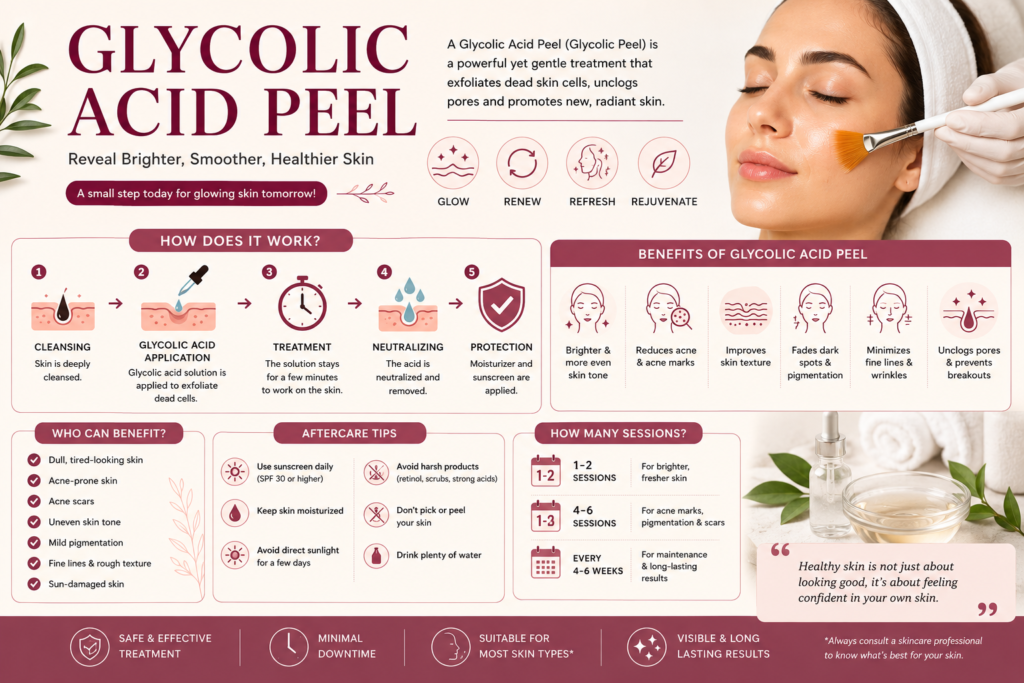
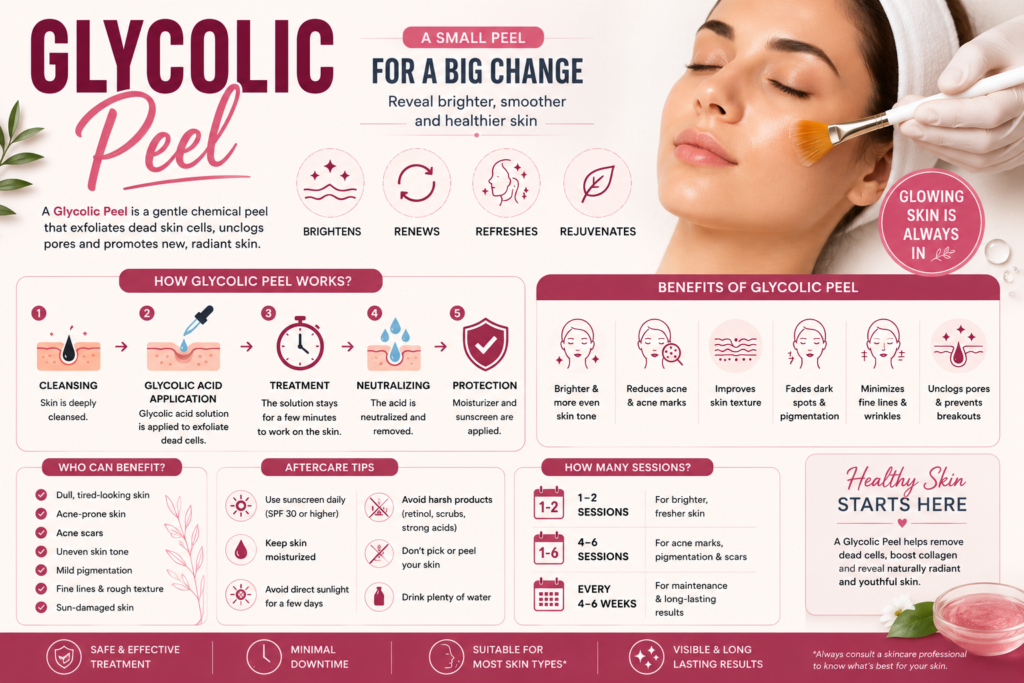
A Glycolic Acid Peel is a popular skincare treatment that uses glycolic acid to gently exfoliate and remove dead skin cells from the surface of your skin. Glycolic acid belongs to the Alpha Hydroxy Acid (AHA) family and is naturally derived from sugarcane.Because glycolic acid has very small molecules, it penetrates the skin easily. This process helps remove the damaged outer layer and stimulates the growth of new, healthy cells. The result is brighter, smoother, and more even‑toned skin.
Why Glycolic Acid Peel Is Popular
Improves dull skin and uneven texture
Reduces acne marks and pigmentation
Encourages healthy cell renewal
Gentle yet effective for many skin types
Many dermatologists and skincare professionals recommend a Glycolic Peel for people seeking noticeable skin improvement without surgery or long recovery times.
How Does a Glycolic Peel Work?
During a glycolic acid peel, a controlled amount of glycolic acid is applied to the skin for a few minutes. The acid gently loosens the bonds between dead skin cells, allowing them to shed naturally.Once the old skin is removed, fresh new cells appear on the surface. This process also stimulates collagen production, which improves skin texture, firmness, and elasticity over time.
Key Benefits of the Process
Removes dull, damaged skin layers
Encourages healthy cell renewal
Boosts hydration and smoothness
Improves elasticity with collagen stimulation
Benefits of a Glycolic Acid Peel
A Glycolic Acid Peel offers multiple skin benefits, making it a popular choice for both men and women who want healthier, glowing skin.
Brighter Skin Tone
Removes dull, damaged cells and reveals fresher, more radiant skin underneath.
Reduces Acne & Acne Marks
Helps unclog pores, minimize breakouts, and gradually fade acne scars and post‑acne pigmentation.
Improves Skin Texture
Regular treatments make rough or uneven skin softer and smoother.
Fades Dark Spots
Sun damage, age spots, and pigmentation become less visible after consistent peel sessions.
Minimizes Fine Lines
Stimulates collagen production to reduce fine lines and early signs of aging.
Clears Congested Pores
Removes excess oil and dead cells, preventing blackheads and whiteheads.
Benefits of a Glycolic Acid Peel
A Glycolic Acid Peel offers multiple skin benefits, making it a popular choice for both men and women who want healthier, glowing skin.
Brighter Skin Tone
Removes dull, damaged cells and reveals fresher, more radiant skin underneath.
Reduces Acne and Acne Marks
Helps unclog pores, minimize breakouts, and gradually fade acne scars and post‑acne pigmentation.
Improves Skin Texture
Regular treatments make rough or uneven skin softer and smoother.
Fades Dark Spots
Sun damage, age spots, and pigmentation become less visible after consistent peel sessions.
Minimizes Fine Lines
Stimulates collagen production to reduce fine lines and early signs of aging.
Clears Congested Pores
Removes excess oil and dead cells, helping prevent blackheads and whiteheads.
What Happens During the Treatment?
A Glycolic Acid Peel is a simple, quick procedure that usually involves these steps:
Thorough cleansing of the skin
Careful application of the glycolic acid solution
Peel left on for a few minutes (depending on skin type)
Neutralization and removal of the acid
Application of a soothing moisturizer and sunscreen
Most people experience mild tingling or warmth during the peel, which fades quickly.
Aftercare Tips
Proper aftercare is essential to maximize results:
Apply sunscreen (SPF 30+) daily
Keep skin moisturized
Avoid direct sunlight for a few days
Do not scrub or pick peeling skin
Skip harsh products like retinol or strong exfoliants for several days
Drink plenty of water to stay hydrated
Following these steps helps your skin heal properly and maintain a healthy glow.
How Many Sessions Are Needed?
The number of treatments depends on your skin concerns:
For brighter skin: 1–2 sessions
For acne scars & pigmentation: 4–6 sessions
For ongoing maintenance: every 4–6 weeks
A skincare professional can recommend the best plan for your skin type.
Are There Any Side Effects?
A Glycolic Acid Peel is generally safe when performed by a trained professional. Temporary side effects may include:
Mild redness
Slight peeling
Dryness
Temporary sensitivity
These effects usually improve within a few days. Always follow your specialist’s aftercare instructions.
Tips to Get Better Results
To maximize the benefits of your peel:
Follow a consistent skincare routine
Wear sunscreen daily
Stay hydrated
Eat a vitamin‑rich diet
Avoid smoking
Schedule regular maintenance treatments if advised
Healthy habits extend the results of your treatment.
Conclusion
A Glycolic Acid Peel is one of the most effective ways to refresh your skin without invasive procedures. Whether you want to reduce acne marks, brighten your complexion, smooth uneven texture, or minimize signs of aging, this treatment delivers noticeable improvements with minimal downtime.
By gently removing dead skin cells, encouraging renewal, and boosting collagen production, a professional glycolic peel helps you achieve clearer, smoother, and healthier‑looking skin. With proper aftercare and regular sessions, you can enjoy a naturally radiant complexion for years to come.
If you’re considering a glycolic acid peel, consult an experienced skincare professional to assess your skin type and recommend the most suitable treatment plan.
Frequently Asked Questions About Glycolic Acid Peel
Is a glycolic acid peel safe?
Yes, a Glycolic Acid Peelis generally safe when performed by a trained skincare professional. Mild redness or peeling may occur but usually subsides within a few days.
How often should I get a Glycolic Peel?
For brighter skin, 1–2 sessions may be enough. For acne scars or pigmentation, 4–6 sessions are often recommended. Many people choose maintenance peels every 4–6 weeks.
Can a glycolic peel help with acne scars?
Yes. Glycolic Acid Peels exfoliate the skin and stimulate cell renewal, which gradually fades acne scars and post‑acne pigmentation over multiple sessions.
Who should avoid a glycolic acid peel?
People with very sensitive skin, active infections, or certain medical conditions should consult a dermatologist before treatment. Pregnant or breastfeeding women should also seek medical advice first.
What should I avoid after a glycolic peel?
Avoid direct sunlight, harsh skincare products (like retinol or scrubs), and picking at peeling skin. Always apply sunscreen and keep your skin moisturized.
How long does recovery take?
Most people experience only mild redness or sensitivity that improves within 2–3 days. With proper aftercare, you can resume normal activities immediately.
Dermatologist Inspired
Professional Grade Formulas
Cruelty Free
Secure Checkout
🎁 Get $10 OFF
Claim your exclusive discount coupon today.
🎉 Success!
Your Coupon Code:
KIAEVA-PV10
We have also sent this code to your email address.